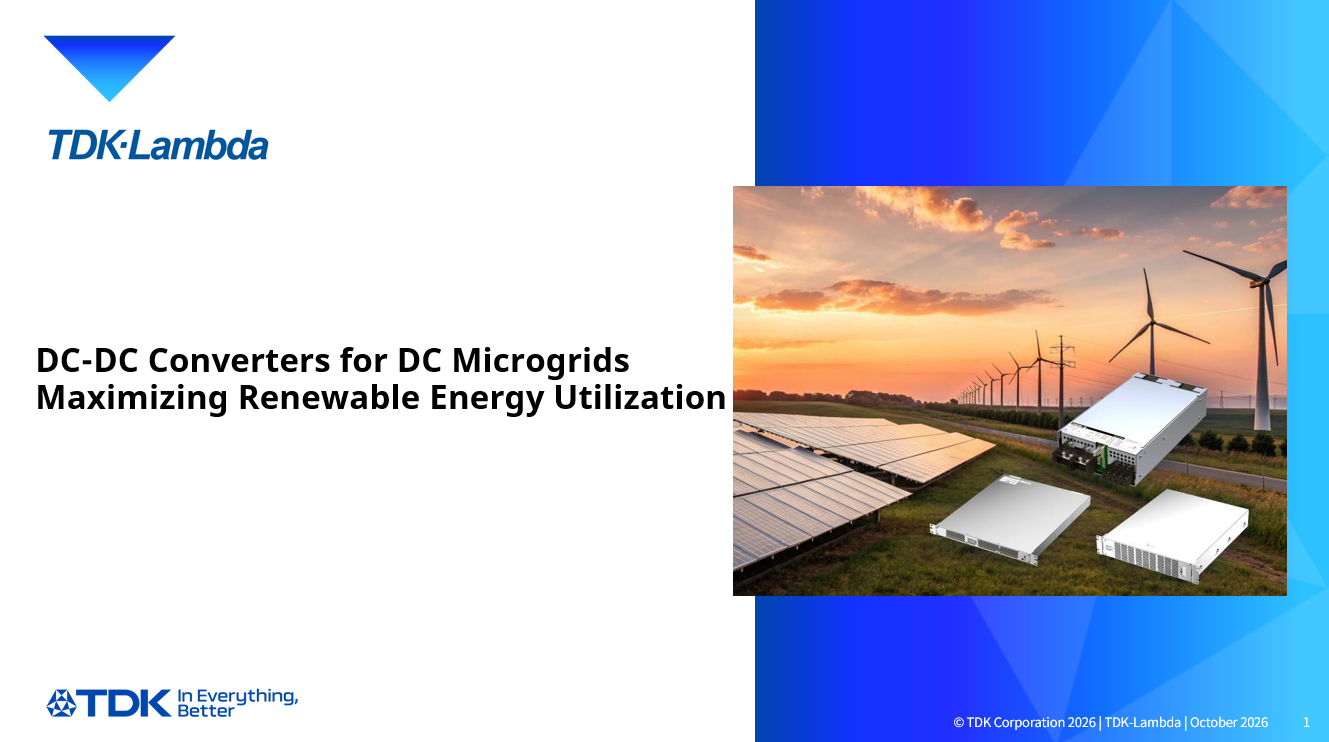
DC-DC-Wandler für DC-Mikronetze maximieren die Nutzung erneuerbarer Energien
Dieser Artikel beleuchtet die Grundlagen von Gleichstrom-Mikronetzen, einschließlich Markttrends, technischer Herausforderungen und wichtiger Anforderungen an die Stromumwandlung. Er zeigt auf, wie die MPPT-Wandler der EMA-Serie, die DC/DC-Wandler der EDC-Serie und die isolierten bidirektionalen DC/DC-Wandler der EZA-Serie von TDK-Lambda eine effiziente Integration erneuerbarer Energien und ein optimiertes Energiemanagement ermöglichen. Außerdem stellen wir das umfassende Portfolio an Stromumwandlungslösungen von TDK-Lambda vor, die für hocheffiziente, zuverlässige und skalierbare Gleichstrom-Mikronetzsysteme entwickelt wurden.
 Data Download

 Loan Program
What Is a DC Microgrid?
A DC microgrid is a small-scale power network that directly connects distributed power sources such as solar power systems, energy storage batteries, and loads through a common DC bus (high-voltage DC bus), enabling power to be distributed and exchanged as DC. Both solar power generation and batteries inherently produce DC power. By performing only voltage conversion on the DC bus, a DC microgrid can avoid the power losses associated with repeated AC/DC and DC/AC conversions. In the event of an emergency, the microgrid can be disconnected from the upstream grid and operated independently in islanding mode, thereby contributing to business continuity planning (BCP) and improved resilience.
Why DC Microgrids Now?
Although AC grids remain the mainstream in today’s renewable energy market, the following changes are occurring simultaneously, accelerating the shift toward DC systems.
Simultaneous Expansion of Renewable Energy and DC Infrastructure
- Solar power and batteries: Both power generation and energy storage are inherently DC-based. Directly connecting them to a DC bus can minimize conversion losses.
- Reuse of EV batteries: The reuse of batteries recovered from EVs as DC energy storage systems is gaining momentum.
- Data centers: Construction is expanding against the backdrop of growing AI demand, and servers, GPUs, and telecommunications equipment are all DC loads. Direct power supply from a DC bus offers advantages in terms of efficiency.
- EV fast chargers: Charging infrastructure is also highly compatible with DC, and its integration with DC buses is being explored.
7 Reasons Why DC Grids Are Attracting Attention
- Renewable energy sources such as solar power and batteries generate and store electricity as DC.
- Highly compatible with energy storage systems, as both charging and discharging are performed using DC.
- High compatibility with EV charging infrastructure.
- Reduced transmission losses and cable costs in long-distance, high-capacity power transmission.
- Improved grid stability, contributing to the mitigation of AC grid frequency instability caused by the increasing share of renewable energy.
- Mitigation of reactive power issues.
- Integration with digital power systems, including power electronics, distributed power supply, and data centers.
Why a DC Bus Is Advantageous(Number of Conversion Stages, Efficiency, and Control)
A DC grid (DC-coupled) configuration is generally designed to connect Solar photovoltaic (PV) systems and energy storage batteries to a common DC bus using DC-DC converters. By reducing the number of power conversion stages, this configuration can improve overall efficiency. The table below summarizes the key differences compared with an AC grid.
| Aspect | AC Grid (Typical Configuration) | DC Grid (DC-Bus-Centered) |
|---|---|---|
| Number of conversion stages | PV → AC → DC (to the battery), etc.; the number of conversion stages tends to increase. | PV and batteries can be consolidated on the DC bus, making it easier to reduce the number of conversion stages. |
| PV → Battery | There are cases in which power passes through multiple conversion stages. | Direct connection via a DC-DC converter is easier to achieve. |
| Control | Coordination among devices tends to become complex. | Power-flow control can be designed more easily through DC-bus voltage control and an energy management system (EMS). |
*PV:Solar photovoltaic (PV) systems
Technical Bottlenecks and Required Power-Supply Specifications
Although DC grids offer advantages in terms of efficiency, there are still only a limited number of essential components available for practical implementation. Consequently, their use remains largely at the demonstration stage, led by some companies and local governments. The required specifications are summarized below.
- High-voltage capability: Support for 1,000 VDC-class input to reduce cable losses and the amount of required materials.
- High-efficiency conversion: The ability to reduce the number of power-conversion stages and achieve efficient conversion with fewer stages.(Non-isolated: 97.5%; isolated bidirectional: 94–96%.)
- Bidirectional operation: A single unit handles both charging and discharging of the battery and can be connected to the DC bus while maintaining DC power, without using an inverter.
- MPPT (Maximum Power Point Tracking): Tracks the optimal operating point of Solar photovoltaic (PV) systems under changing solar irradiance to supply maximum power.
- Scalability and communication control: Supports series/parallel expansion, as well as monitoring and parameter configuration via RS-485/Modbus and other communication interfaces.
TDK-Lambda Product Lineup: DC-Bus-Centered Configuration
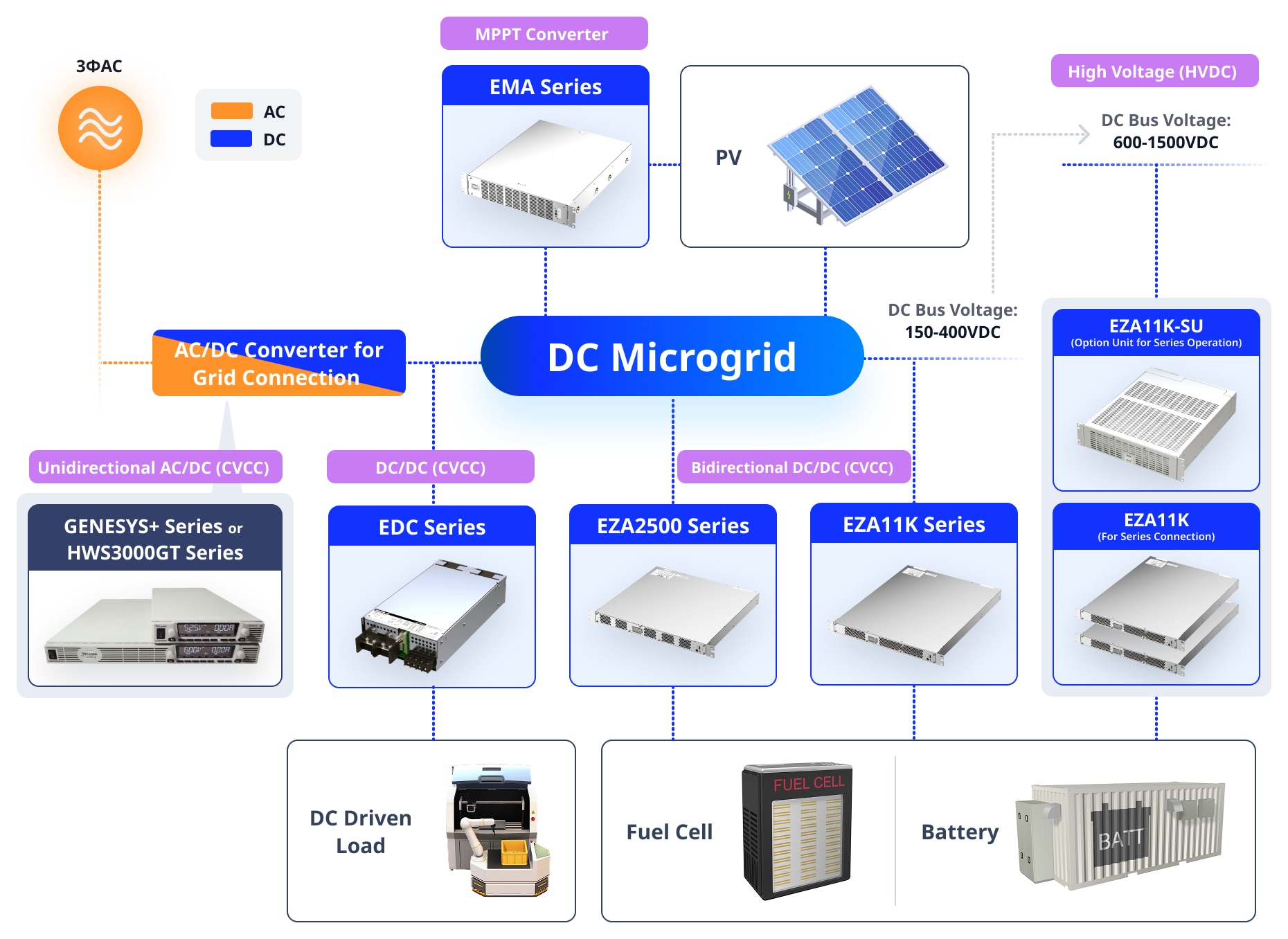
TDK has developed the EZA Series, a bidirectional DC-DC converter designed for DC grid applications, and newly announced the EMA and EDC Series in December 2025, thereby expanding its lineup of DC grid components. The figure below shows an example of a microgrid configuration in which converters for the power generation (PV), battery, and load sides are arranged around a central DC bus.
| Category | Equipment Configuration | Role |
|---|---|---|
| Power generation (PV) side | PV → EMA Series (MPPT converter) | Supplies maximum power from the PV system to the DC bus (150–400 VDC). |
| Grid connection side | 3-phase AC ⇔ GENESYS+ Series / HWS3000GT Series | Connects the utility AC grid and the DC bus through a unidirectional AC/DC converter (CVCC). |
| Load side | EDC Series (unidirectional DC/DC converter, CVCC) | Provides a stable power supply to DC-powered loads. |
| Battery / fuel-cell side | EZA2500 Series / EZA11K Series (bidirectional DC/DC converter, CVCC) | Controls charging and discharging bidirectionally with a single unit. |
| High-voltage (HVDC) side | EZA11K (series-connection unit) | Supports step-up conversion to a DC-bus voltage of 600–1,500 VDC. |
*PV:Solar photovoltaic (PV) systems
EMA Series: MPPT Converter for Maximizing Solar Power Efficiency
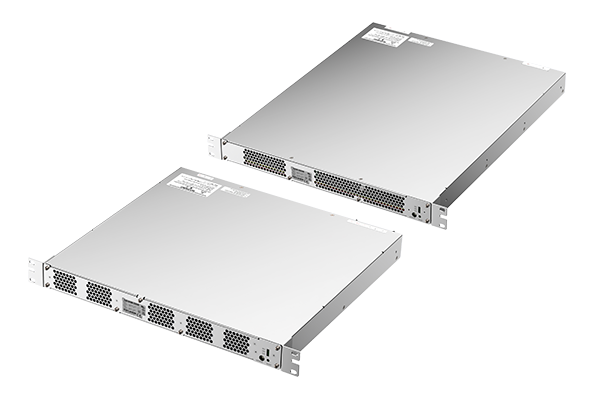
EMA is an MPPT-controlled power supply that tracks changes in solar irradiance to deliver maximum power to the DC bus. It supports an input voltage range of 50–1,000 VDC, an output voltage range of 240–850 VDC, and a maximum output power of 12 kW. With an efficiency of 97.5% (non-isolated), it can be expanded in capacity through parallel connection. Voltage and current values can be acquired via communication, making it easy to monitor power generation status. Communication is supported via Modbus RTU (RS-485). Orders will be accepted starting in August 2026.
EDC Series: Compact, High-Capacity Unit-Type DC-DC Converters
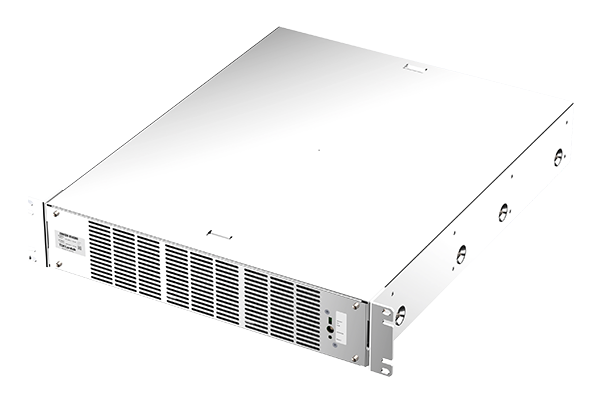
Although the EDC Series features a DC input, it supports CVCC (constant-voltage/constant-current) operation. Both the output current and voltage can be set from 0% of the rated value (the output voltage is adjustable down to 0 V). The system can be expanded through series and parallel connections: up to 468 VDC in series (three units) and up to 10 units in parallel, providing an output capacity of up to approximately 85.5 kW (based on the EDCM3000). Its unit-type design makes system configuration easy. Applications include industrial equipment, railway-related systems, and testing and evaluation equipment. The lineup consists of the EDCM (3,000 W) and EDCL (1,500 W) models.
EZA Series: Isolated Bidirectional DC-DC Converter
The EZA Series is an isolated bidirectional DC-DC converter power supply that handles both charging and discharging between the DC bus and batteries in a single unit. Featuring digital control and SiC MOSFETs, it achieves an efficiency of 94–96%. The lineup ranges from 2.5 kW to 11 kW, with 3,000 VAC input-to-output isolation. For applications involving battery connections, an isolated configuration offers advantages in terms of safety. The EZA Series can also be used to recover regenerative energy from cranes, elevators, AGVs, forklifts, and other equipment. As shown in the figure above, the use of a series-operation unit (for connecting EZA11K units in series) enables HVDC configurations of up to 1,500 VDC.
These three series allow many parameters to be configured flexibly according to customer requirements via communication. By utilizing this communication functionality, various operating modes and system control strategies desired for DC microgrid systems can be realized.
How to Conduct Hands-On Evaluations Using Loaner Units(Evaluation Points and Checklist)
TDK provides loan units to help customers verify solutions on-site before purchase. Please take advantage of this program.
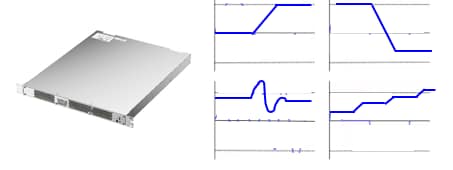
- Evaluation Example 1: Evaluation of setting accuracy and output stability
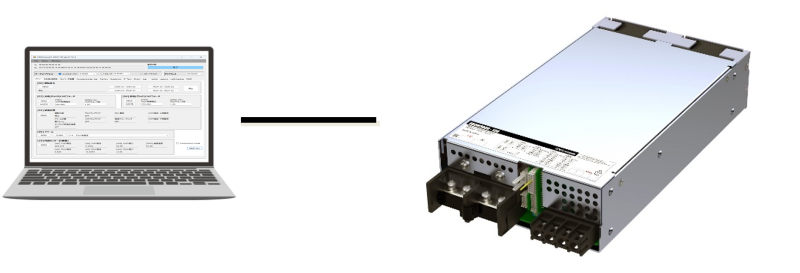
- Evaluation Example 2: Verification of software capabilities
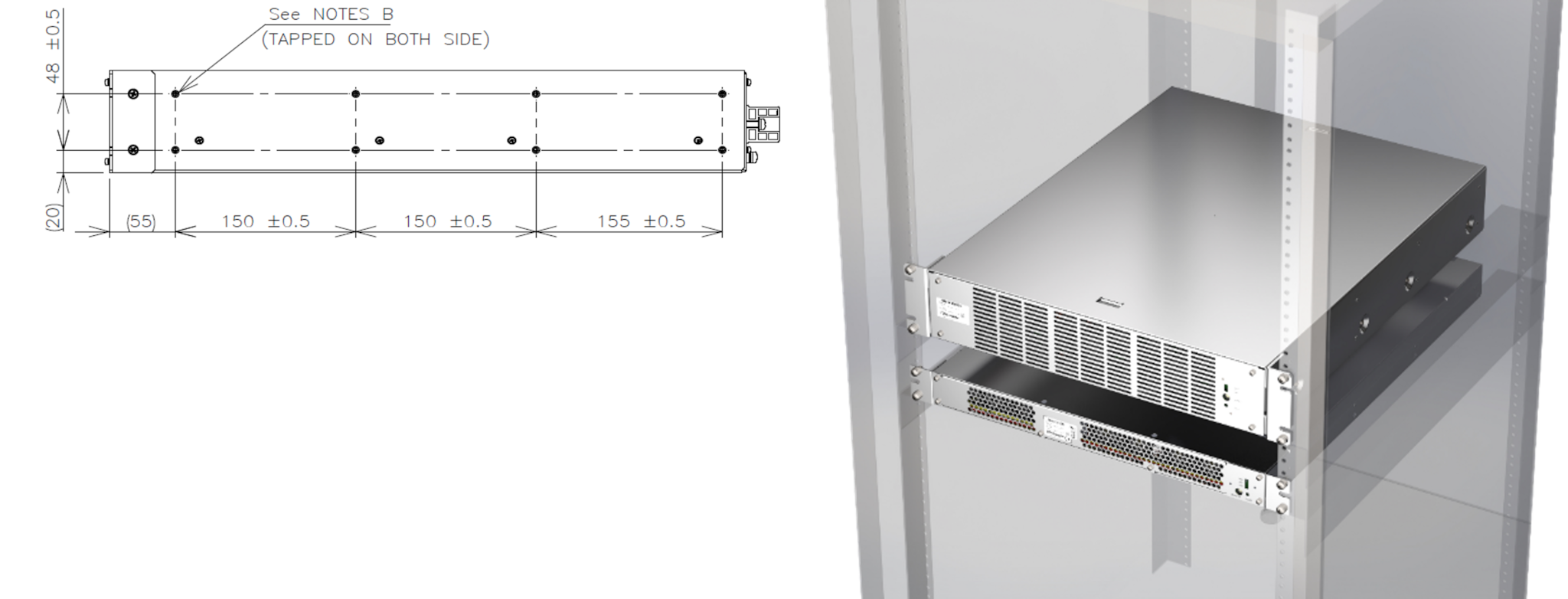
- Evaluation Example 3: Evaluation of appearance, dimensions, and operability
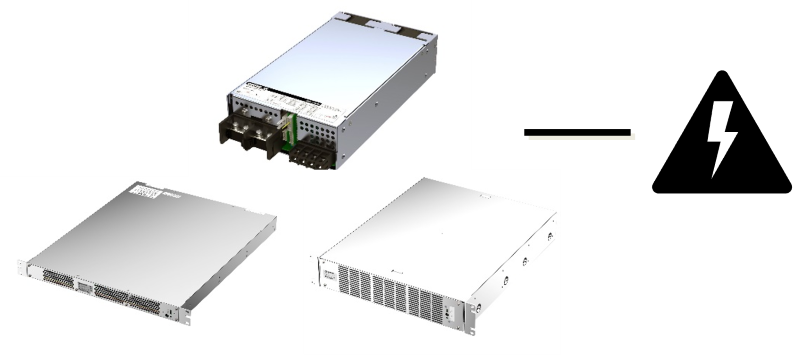
- Evaluation Example 4: Evaluation of compatibility with the test environment and other equipment
Loan Program
Loan units are available prior to purchase so you can try the product and confirm usability. Our sales and technical staff will provide follow-up support on usage after shipment.
<Notes>
- Loan quantities, duration, delivery/return dates are coordinated by local sales offices.
- Depending on requested conditions, some requests may not be accommodated.
Q. Are shipping costs charged?
A. Return shipping costs are borne by the customer. Any other charges, if applicable, will be confirmed on a case-by-case basis. It varies depending on the each location. Please contact us.
Q. What is the loan period?
A. Varies depending on product availability. Please contact your nearest sales office.
Q. If I don’t know how to operate it, is support available?
A. Our sales and technical teams will provide support. Please feel free to contact us.
Q. Is the control software paid?
A. Control software is available. Some test-standard-specific software options are chargeable; please confirm during the loan period.
FAQ (Frequently Asked Questions)
Q1. What advantages do DC microgrids offer compared with AC systems?
A. When the power generation, energy storage, and loads all use DC, the number of power-conversion stages can be reduced, enabling efficient conversion with fewer stages. This helps reduce conversion losses and the amount of required equipment and materials. DC microgrids are also well suited for independent operation during emergencies.
Q2. Why is an MPPT converter necessary?
A. The optimal operating point of a solar power system changes continuously depending on solar irradiance and temperature. MPPT tracks this point and maximizes the power supplied to the DC bus.
Q3. How should isolated and non-isolated converters be selected?
A. In general, isolated converters such as the EZA Series are selected for battery charging and discharging paths from a safety standpoint. For Solar photovoltaic (PV) systems step-up/step-down applications where high efficiency is prioritized, non-isolated converters such as the EMA Series are typically selected.
Q4. Can the products be tested for evaluation purposes?
A. Please contact TDK-Lambda for further details.
Summary
This article introduced the growing trend toward DC microgrids and the power solutions offered by TDK.
Renewable energy is generated as DC from the outset, and DC microgrid configurations that directly connect power sources to a DC bus are accelerating in adoption worldwide because they minimize conversion losses. Market trends such as the increasing density of data centers, the spread of EVs, and the utilization of reused EV batteries are further driving the transition to DC-based configurations. In these applications, it is essential to build power systems that meet a combination of requirements, including high voltage, high efficiency, high capacity, bidirectional operation, MPPT functionality, scalability, and communication interfaces.
With its diverse lineup, including the EMA, EDC, EZA, GENESYS+, and HWS3000GT Series, TDK provides the components required for DC-bus-centered configurations through a one-stop solution. From design through implementation, TDK will continue to support improvements in system quality and ensure reliability with solutions tailored to increasingly diverse needs.
DC Microgrid Power Products - Document Download:
[FILE NAME]tdk-apn-dc-microgrid-dc-power-supply-loaner-en
[CAMPAIGN NAME]dm_t130_dc-microgrid-dc-power-supply

To request a loan unit, please complete the form below with your desired model, purpose, requested loan period and installation site; our team will check availability and contact you.

For inquiries related to our products or sales, please contact us by filling the following Contact Form.
Please click here for information on the list of distributors.
Related Links